
Biography
Life and Biography of José Roger Balet: From Barcelona to Argentina
Discover who José Roger Balet was
1. Introduction to the Life of José Roger Balet
José Roger Balet (Barcelona, March 3, 1889 – Buenos Aires, 1967) was a prominent Catalan-born entrepreneur and philanthropist who, after emigrating to South America in 1906, stood out for his entrepreneurial spirit and deep social commitment. Arriving in Buenos Aires as a young man with a single suitcase and a strong work ethic forged during his youth in Barcelona, he built one of Argentina’s best-known retail chains.
In Argentina, he worked in several trades until, in 1913, he opened his own store, the “Mundial Bazar”. That venture was the forerunner of the “Bazar Dos Mundos” department store chain, which grew to more than twenty-five branches across the Argentine capital.
Beyond his business success, he is remembered for his extraordinary philanthropic work. His gratitude toward Argentina led him to donate 54 schools across the Argentine provinces, as well as in Uruguay and Chile, with the goal of advancing public education and community welfare, alongside many other humanitarian projects.
His life is an inspiring example of how business success can go hand in hand with deep social commitment, leaving an enduring legacy in education and culture. His impact lives on in the educational institutions he founded, reflecting his lifelong dedication to social progress and the development of future generations.
2. Historical Context of the Late 19th Century
If we briefly examine the historical period between his birth and his departure for America, Spain was living under the Bourbon Restoration—a political system based on alternating government parties and controlled elections that offered apparent stability but little real social change.
In 1898, the country suffered a severe blow with the loss of its last overseas colonies (Cuba, Puerto Rico and the Philippines), triggering a profound crisis of national identity and a climate of pessimism.
By contrast, Barcelona was undergoing a period of modernization and industrial growth, particularly in the textile sector. The city was expanding rapidly in its urban layout, while also becoming a center of social conflict marked by the rise of the labor movement, strikes and the influence of anarchism.
At the same time, artistic Modernisme was flourishing—led by figures such as Antoni Gaudí—alongside the first Catalanist political and cultural movements. Barcelona was a vibrant city in the midst of transformation, yet shaped by the social, economic and cultural tensions of the turn of the century.
3. Family and Origins in Barcelona (the Roger and Balet Families)

- His father, Pablo Roger y Villarrubla, originally from Lleida, worked as a commercial representative for “The Wrapping Paper and Printing Supplies Emporium” (Los grandes almacenes de papeles para embalaje y artículos de imprenta) owned by Mr. Esteban Banch in Barcelona.
- His mother, Dolores Balet Nadal (July 2, 1860, Barcelona – July 27, 1952, Buenos Aires), was the youngest of five siblings. She lived in Barcelona until, years after her son José emigrated to Argentina and after becoming a widow, she decided to follow in his footsteps and settle permanently in Buenos Aires in 1915, where she resided until her passing. In a moving tribute in 1960, the library of the Ricardo Rojas School in Caseros, Buenos Aires, was named in her honor.
- As for his siblings, the eldest was Enrique Baldomero (1884–1970), who at his brother José’s request also traveled to Buenos Aires in 1915 with his wife and his five-year-old daughter Teresa to help him in his businesses, eventually becoming General Manager of the Bazaars.
His younger sister was Margarita (born 1892); at present, available information about her is limited, though further archival research is planned to document her life more fully.
- Regarding his wife, Dresda Rossi, and their four children, we explore their story in detail in section 11 in order to preserve the chronological thread of the biography.
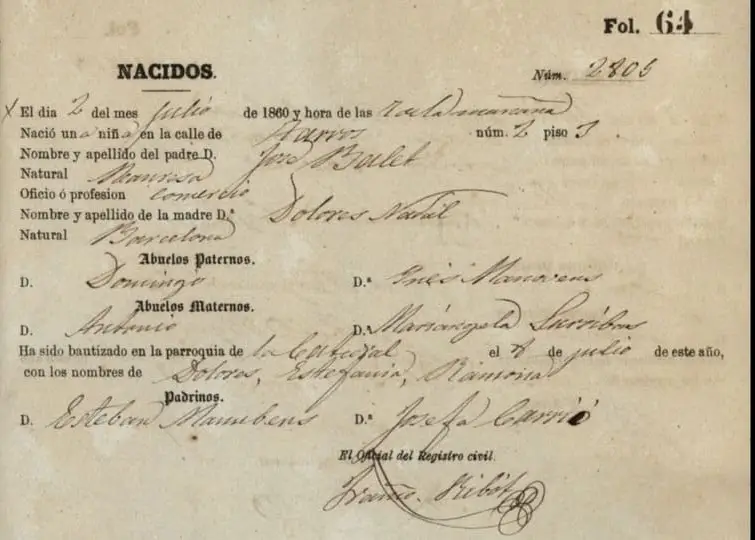
His Paternal Uncles (Roger Family)
Andrés and José Roger Vilarrubla were Catholic priests who served as parish priests in two towns in the province of Lleida: Almenar and Granyena de les Garrigues.
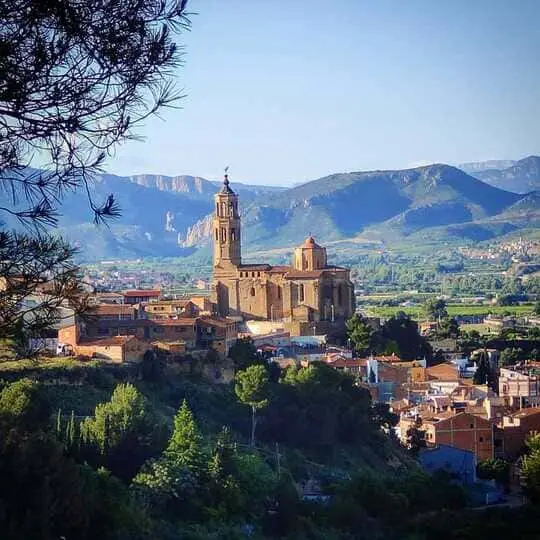
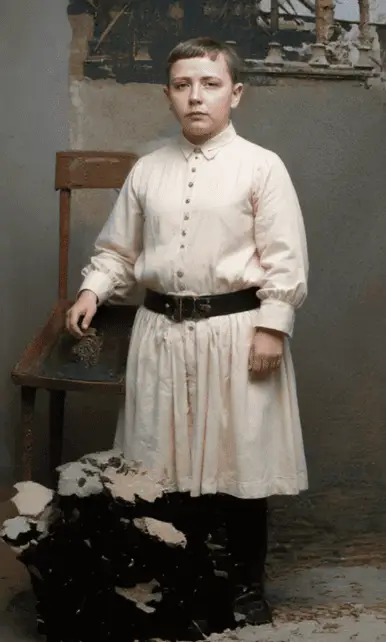
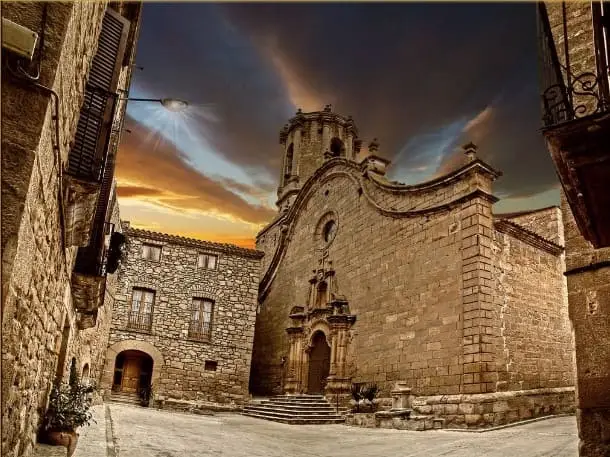
From a very early age serving as an altar boy, he displayed remarkable resourcefulness. With natural charm, he persuaded parishioners to contribute alms, and his enthusiasm for ringing the church bells was such that, as he himself proudly recounted, he was the best bell-ringer in the town.
His Maternal Uncle (Domènec Balet i Nadal)
Domingo (Domènec) Balet Nadal (Barcelona, June 15, 1844 – February 15, 1915) was a prominent Master Builder (“Architect”) whose professional career left a lasting mark on the architecture of Barcelona. His work combined Modernisme, Neo-Mudéjar and Neo-Gothic styles across residential, industrial and religious projects.
Detailed information about his life, architectural projects and exhibitions can be found on his official website: www.DomenecBalet.com
Here we share a direct link to an interview broadcast on Radio Vallromanes, available on YouTube, explaining this recent family discovery.
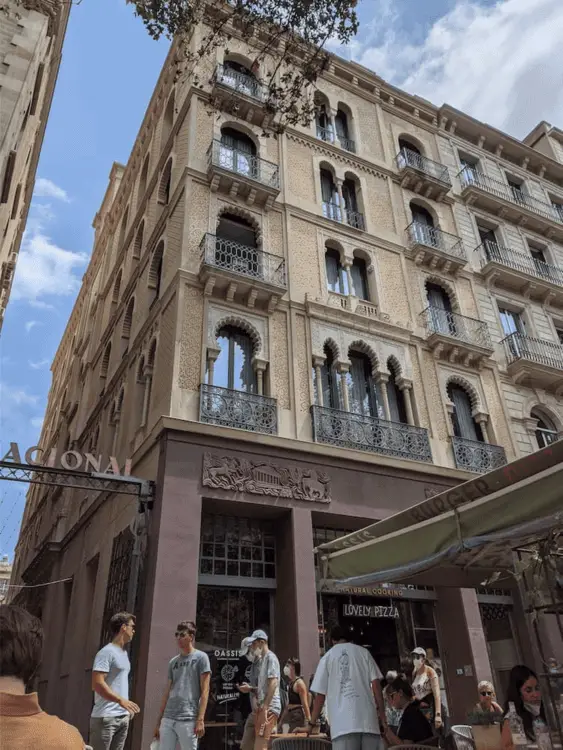
(Passeig de Gràcia, Barcelona)
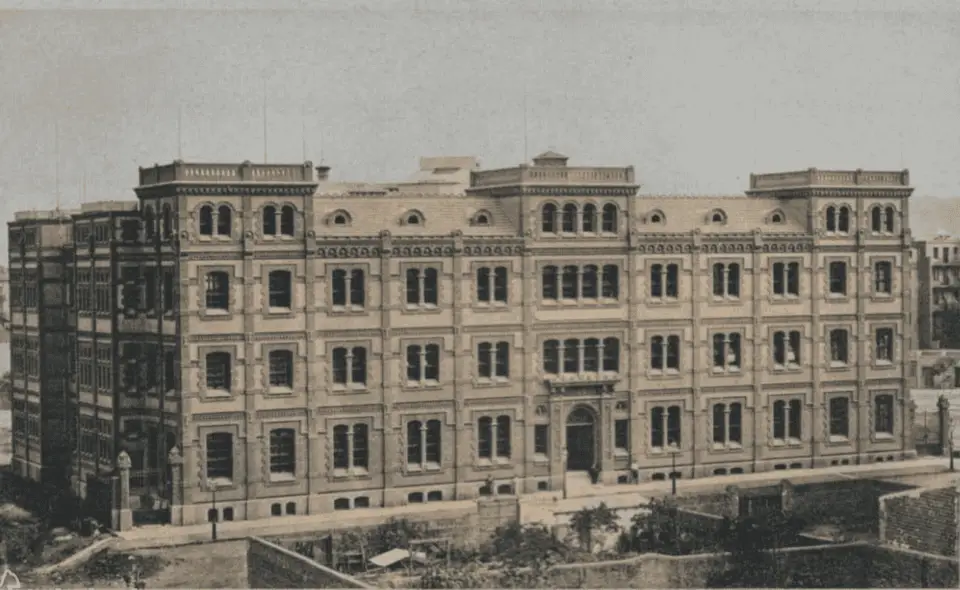

Domènec Balet Nadal
His Maternal Cousins (Balet Family)
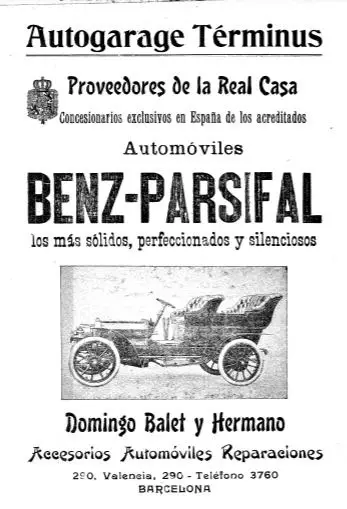
Domingo and Enrique Balet Duran secured in 1901 the exclusive representation in Spain for Benz (now Mercedes-Benz) and founded the Auto Garage Términus dealership. They later added other prestigious marques such as Hispano-Suiza, Berliet and Anglada.
Among many milestones, perhaps the most famous was the sale of an Anglada automobile to King Alfonso XIII, complete with private driving lessons given to the King by Mr. Domingo Balet himself, which earned them the title of Purveyors to the Royal Household.
More information: www.AGTerminus.com
4. Family Home in the El Born Neighborhood of Barcelona
He was born and spent his childhood at number 3 Calle Lluís el Piadoso, on the fifth floor of a building in the historic El Born neighborhood of Barcelona, next to the Church of Sant Pere de les Puel·les, where he was baptized with warm water due to his delicate health.
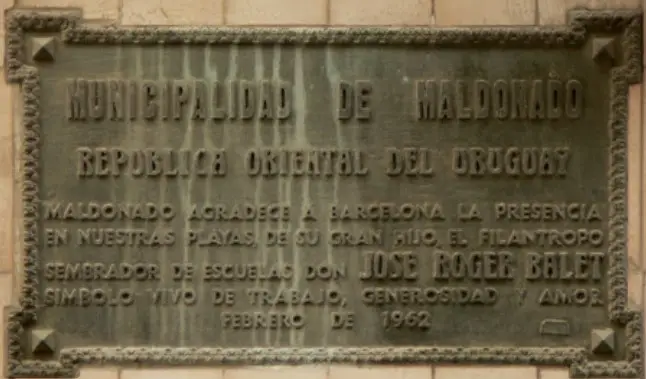
Many years later, in 1962, he returned from Buenos Aires to Barcelona to attend a ceremony organized by the Ambassador of Uruguay, during which a commemorative plaque was placed on the facade of his birthplace in his honor, where it still remains today and reads as follows:
The Municipality of Maldonado, Oriental Republic of Uruguay
Maldonado thanks Barcelona for the presence on our shores of her great son, the philanthropist “sower of schools” Don José Roger Balet, a living symbol of work, generosity and love.
February 1962
5. Childhood in Barcelona
At the age of 9, as his health was not improving, his parents sent him to the country house of relatives, where he took part in farm chores that he greatly enjoyed. In those days, donkeys were essential pack animals used for transporting goods and working the land. He quickly formed a close bond with a little donkey that he fed, brushed, petted and cared for.
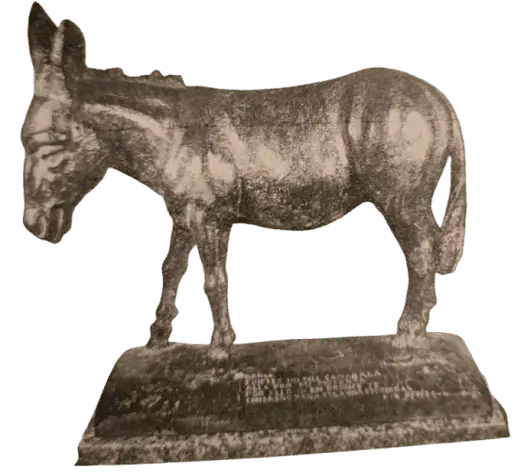
At the base of this bronze statuette kept in his office, the following inscription could be read:
“You were my faithful comrade back in my youth; therefore, in bronze I immortalize you for all posterity.
Pepito”
Source: J.R.B. Sembrador de escuelas; Yderla Anzoátegui
In his biography he recalls that he never owned toys as a child, and reflects that even in times of poverty, children who help their families through their work do not suffer from it, but do so with joy.
6. Adolescence and First Jobs
At the age of 11 he returned to Barcelona and began working without pay for two years at a small novelty and notions shop on Calle Fernando (Carrer Ferran), across from the Church of Sant Jaume. Stores of this kind were a blend of haberdashery, costume jewelry shop and gift store.
As the sole employee, he learned how to run the business under the guidance of the owner, Doña Paulina, who treated him with great affection.
One day, his father decided to test his son’s salesmanship by giving him three boxes of carved white candles to sell. To his father’s surprise, young José did not even have to leave the building: a neighbor had just passed away, and he offered the candles for the wake. He used to recall the feat with the phrase:
“The very first business deal I ever made in my life was selling candles to a dead man.”
Source: J.R.B. Sembrador de escuelas; Yderla Anzoátegui
After that first job, he began working on commission for the same company as his father, selling household goods across the city until the age of 15, when he decided to do the very same work on his own account.
7. The Dream of Emigrating to America (1906)
With tremendous enthusiasm, he devoted himself to saving every coin to finance his dream voyage to America before being called up for compulsory military service, which would have delayed his plans by several years.
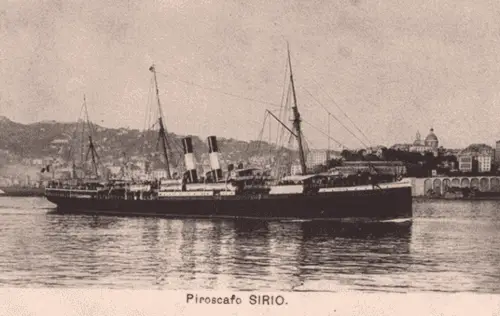
With everything ready, he was scheduled to sail on the Italian steamship Sirio. When the day arrived, however, the ship did not dock inside the port of Barcelona due to port tax disputes, so he had to row out in a small boat accompanied by his father and a shipping agent. Upon reaching the vessel, the captain refused to take on any more crew members of such a young age, forcing him to return ashore and wait for another ship.
Although deeply disappointed at first, he soon saw it as providential: just two days later (on August 4, 1906), the Sirio sank off Cape Palos near Cartagena, claiming the lives of nearly half the passengers—approximately 240 people.
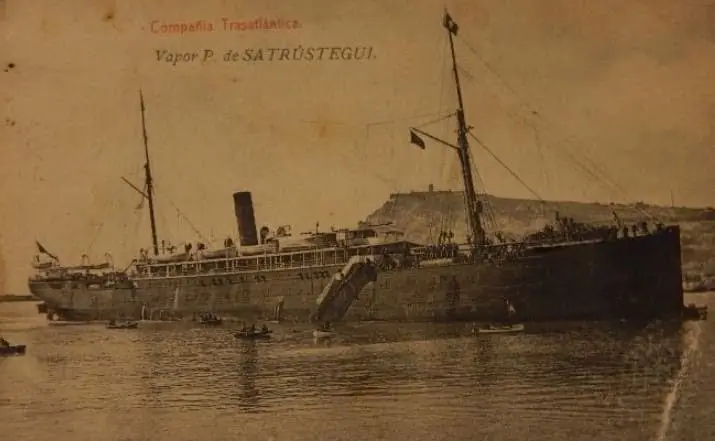
The Crossing on the Patricio de Zatrútegui
Finally, on September 3, 1906, he boarded the steamship “Patricio de Zatrútegui” for a voyage that lasted 21 days.
Passenger accommodations on the ship were divided into three sharply distinct classes: first, second and third. José Roger traveled in third class, where conditions were extremely harsh. Food was scarce and of poor quality, and passengers had to eat sitting on the floor.
Determined to improve his situation and that of his fellow travelers, he spoke with the ship’s cook and offered to help with any task needed. Impressed by his initiative, the cook invited him to assist in the second-class dining room. There, the food was far better and more plentiful, and the untouched leftovers were routinely thrown overboard into the sea.
José accepted without hesitation, but did not stop at performing his assigned duties: moved by a deep sense of solidarity, he began gathering part of that surplus food and distributing it among the third-class passengers. His gesture not only relieved the hunger of many, but also instilled a sense of dignity and hope amid the grueling crossing.
He used to sum up the voyage in his own words:
“I came from Spain on foot, because there was nowhere to sit,
and in third class, because there was no fifth class.”
Source: J.R.B. Sembrador de escuelas; Yderla Anzoátegui
8. Arrival in Montevideo (Uruguay)
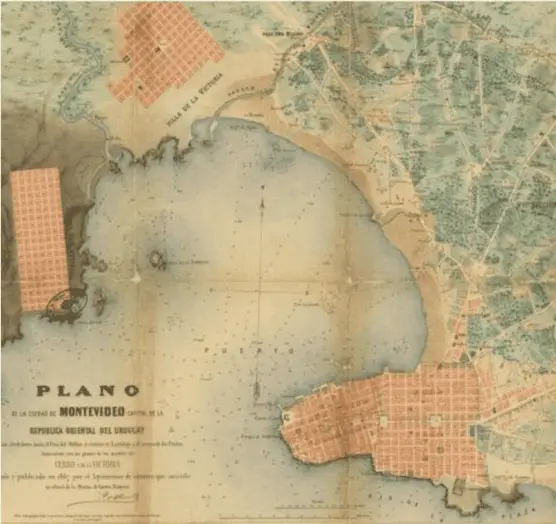
After a three-week crossing, on September 24, 1906, the ship arrived in Montevideo in the midst of a fierce storm: the sea was rough, rain poured down heavily and the wind battered the vessel relentlessly. Conditions were so severe that it was impossible to dock at the port or use the gangway to disembark.
Faced with this situation, the captain resorted to an unconventional yet ingenious solution: using the cargo winch—normally reserved for hoisting freight—to lower José and another young passenger who needed to disembark. Inside a large basket, they were lowered safely ashore, completing the maneuver successfully despite the storm.
The Two Gold Pesos!
Upon setting foot on Uruguayan soil, he was fascinated by the city, walking it from end to end in search of employment. However, the scarcity of job opportunities gradually eroded his hopes—and, little by little, his savings as well.
One day, after walking for hours, he sat down exhausted on a bench in Plaza Libertad—popularly known as Plaza Cagancha. Night fell, and having nowhere else to take shelter, he lay down on that very bench and fell asleep.
That was the first of eleven nights he spent sleeping outdoors—until one day a stranger approached him, asked him a few questions and, upon hearing of the harsh journey he had endured, generously handed him two gold pesos.
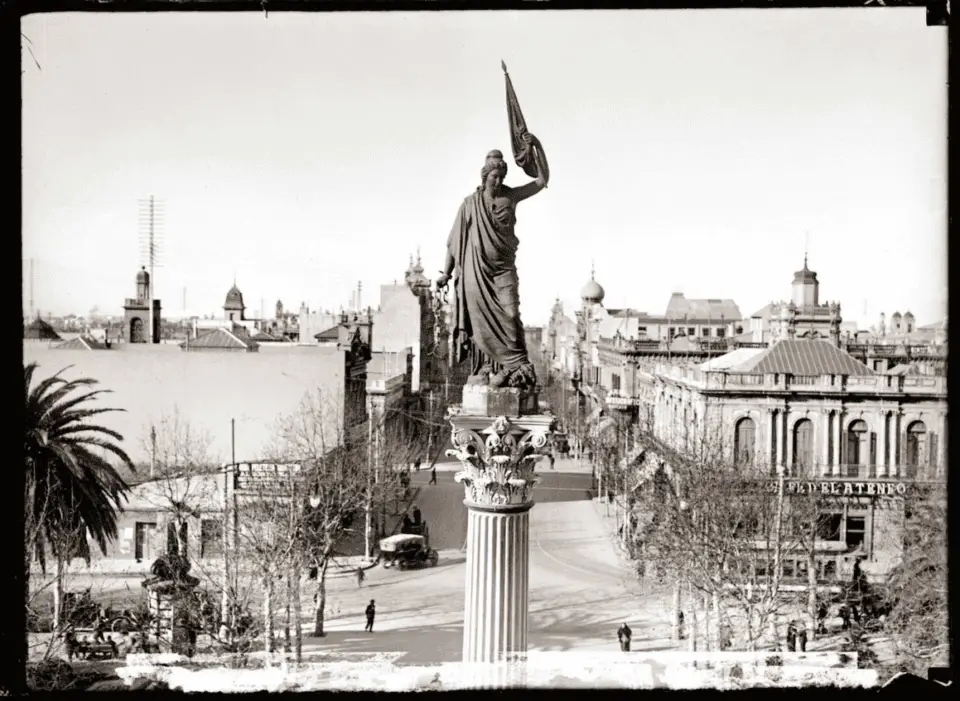


Overjoyed and feeling that fortune was finally smiling on him, he rose from the bench, resumed his job search with renewed energy, and found a modest job at a grocery store whose owner also ran a small boarding house next door with 14 boarders. His job was to help the waiter serve the boarders’ tables.
Once again he used his wit to stave off hunger, eating the pudding on the way from the kitchen to the dining tables and serving the guests fruit instead.
9. Journey and Arrival in Buenos Aires (Argentina)
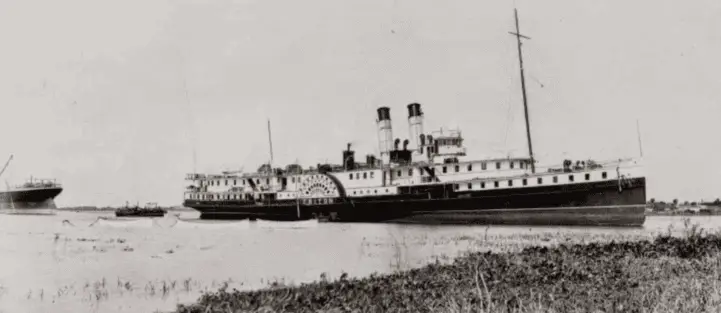
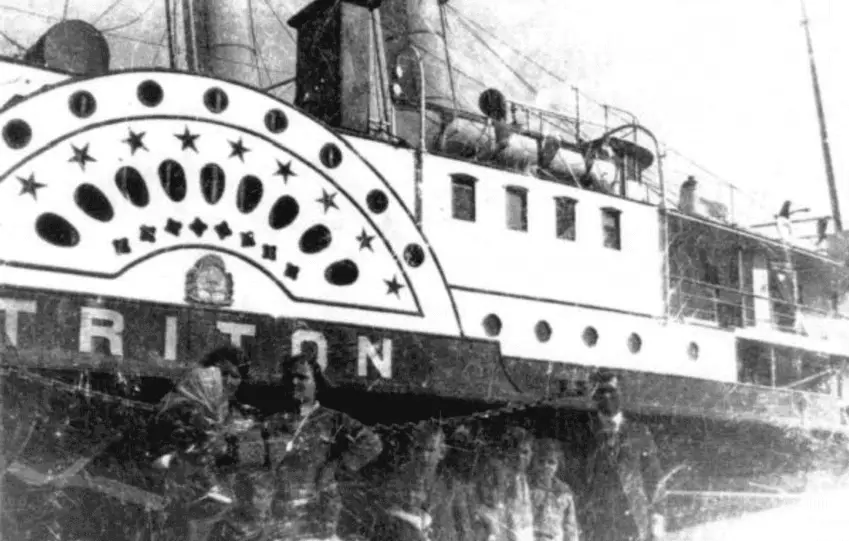
After working at the boarding house for just a few days and realizing that such work had no future for him, he bought a 1-peso ticket and boarded the steamship Triton, bound for Buenos Aires, his dreamed-of destination.
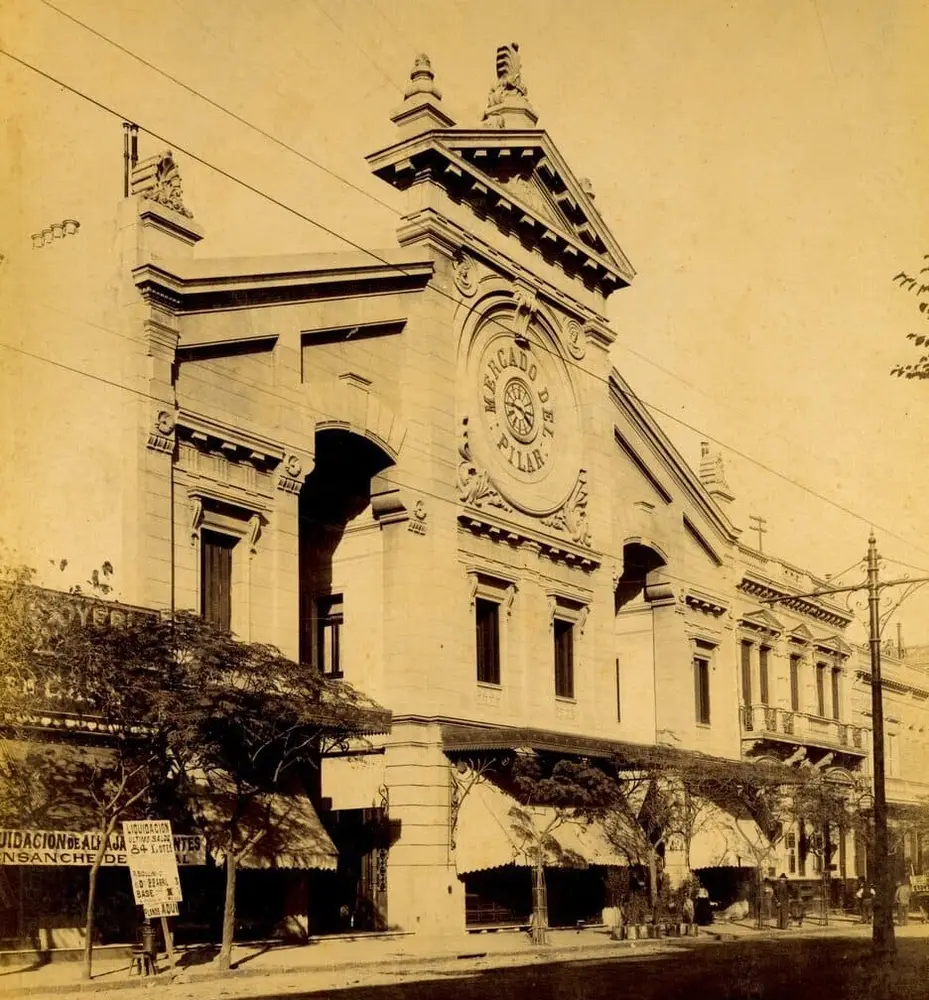
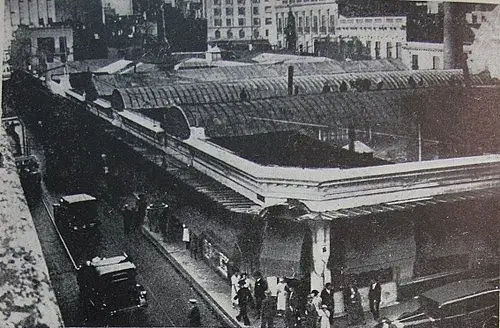
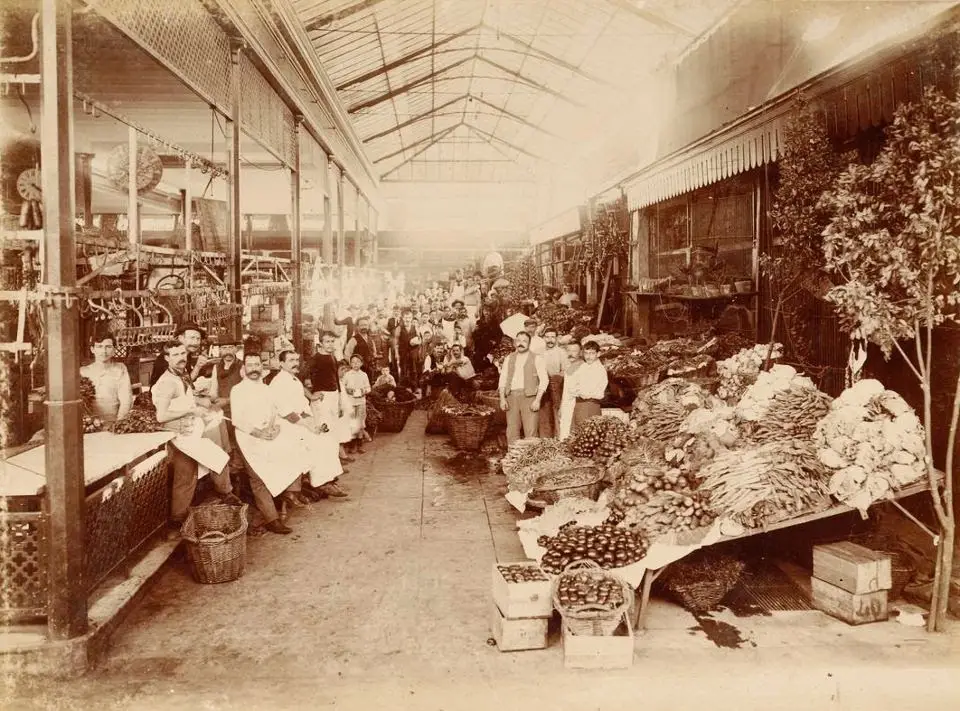
Upon arriving at the port of Buenos Aires, he asked for directions to find a nephew of his father’s named José Borró, whom he had never met in person. He walked to the stall Borró had run at the Mercado del Pilar on Calle Santa Fe, only to be told that four or five years earlier he had moved his stall to the Mercado del Plata. Walking there, he found his previously unknown relative, who gave him a home, a room and hot meals.
For 15 days he helped José Borró at his stall selling butter, eggs and cold cuts without pay, as a gesture of gratitude. Although the workdays were long and hard, he felt deeply fortunate for the help he had received.
10. First Paid Job in Buenos Aires
Two weeks later, Mr. Borró managed to find him a job as an errand boy (cadete) that included both wages and lodging. However, the lodging turned out to be a dismal basement filled with discarded junk and infested with rats, fleas and bedbugs. Though the place was far from decent, he faced the infestation with good humor: he singed the insects with a candle and lined up the remains on the table.
Recalling those early days, Don José used to remark with irony:
“The cot practically walked on its own!!”
Source: J.R.B. Sembrador de escuelas; Yderla Anzoátegui
Doña Margarita’s Boarding House

His housing situation soon improved thanks to his relative, who recommended an affordable boarding house serving good meals, run by Doña Margarita. Even so, in order to save money, at first he skipped breakfast, despite feeling hungry every morning.
Once again he relied on his resourcefulness: noticing that a milkman delivered milk every morning, he asked him to bring him half a liter as well, which solved part of his breakfast. Still lacking bread, he noticed that several boarders left one of the two rolls served to them untouched. He therefore asked permission to leave work a little early so he could arrive at the boarding house first and quietly take one of the leftover rolls.
When one day a boarder complained about the missing bread and the waiter grew suspicious, José devised a clever way to avoid being caught: he wore an oversized old overcoat he had inherited, which allowed him to slip the bread roll into a deliberately unstitched inner lining without anyone noticing.
11. Marriage to Dresda Rossi and Children
Roger Balet was an example of tenacity and personal effort. Relying on nothing more than his own determination, he forged his own path, driven by a strong sense of responsibility and deep love for his family.
From the moment he arrived in Buenos Aires, he always kept his parents in mind, sending them money every month and increasing the amount as his financial situation improved, without anyone ever having to ask him.
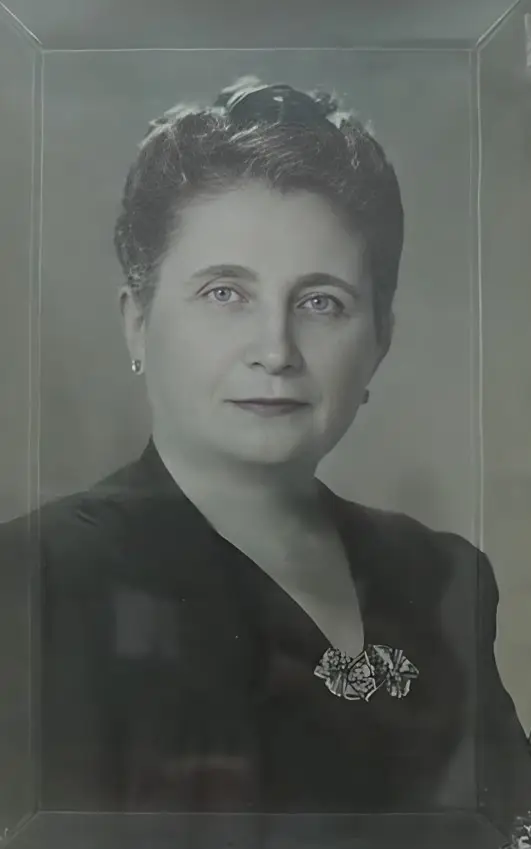
He was a serious young man who cared little for parties, preferring quiet life to superficial social gatherings. In 1910, during the celebrations of the Centennial of the May Revolution, he attended several commemorative events. Around that same time, he began visiting a roller-skating rink on Calle Florida, where on July 9, 1910, he met Dresda Rossi, a reserved young woman of refined manners and great sensitivity with whom he immediately connected.
Dresda had arrived in Argentina from Italy as a child and, after losing her parents, Héctor Rossi and Agar Guasti, lived with her aunt and uncle. Her discretion and gentleness captivated him, inspiring a natural desire to protect her. Within a few months of meeting, they began a brief but devoted courtship, and on March 6, 1911, barely nine months after meeting, they were married in the neighborhood of Belgrano.
The couple settled into a spacious home in Núñez, where they raised a family of four children: Ataulfo, Enrique, Elena and Dresda. Dresda was not only a loyal and loving companion, she also shared Roger’s vocation for helping others. Together they traveled across Europe and carried out humanitarian initiatives, especially in children’s hospitals, where she personally distributed toys to sick children on her husband’s behalf.
To the end of her days, Dresda maintained an active and devoted spirit, looking after every detail of their home and family well-being.
He, for his part, valued solid and lasting principles above all else, shunning luxury and vanity. His personal life was yet another reflection of his philosophy: perseverance, careful thought, firm values and genuine affection.
12. The Economic Crisis of 1932 and How He Overcame It

The economic crisis of 1932 in Argentina was directly triggered by the 1929 Wall Street Crash in the United States, which unleashed a deep global depression; Argentina, heavily dependent on primary exports, suffered a sharp drop in revenues and a severe currency devaluation.
José Roger Balet firmly rejected the prevailing defeatist attitude. While many succumbed to pessimism, he bet on growth: he opened new branches of his company and expanded existing ones, convinced that Argentina had the strength to overcome the recession.
He sharply criticized those who took advantage of working people’s hardship, particularly suppliers of essential goods. In his view, the true crisis was a lack of confidence and the selfish attitude of certain sectors, rather than an insurmountable economic problem.
He maintained that those who had prospered in times of abundance had a moral duty to act responsibly in hard times, believing that if one knew how to win, one must also know how to lose with dignity. Through this philosophy, he set an example of commitment and faith in the country.
13. Escape from Nazism and the Second World War
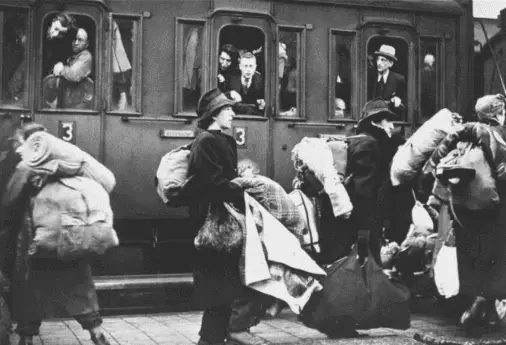
In mid-1939, while on a business trip in Europe, José Roger Balet was in Leipzig (Germany) when the imminent outbreak of war—the Second World War—was announced. He managed to leave Germany just three days before the official declaration of war, traveling first to Austria on the last departing train, and, as Austria was also extremely dangerous, continuing on to Italy just as hostilities broke out.
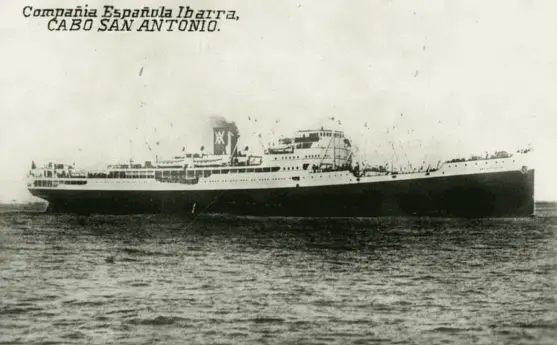
Unable to secure a ticket due to the massive rush of people trying to leave Europe, he tried to board a ship in Genoa without immediate success. After several days waiting around the port, he managed to board the Spanish ship Cabo San Antonio as a stowaway, with the help of a steward.
After remaining hidden for two days, he finally presented himself to Captain José Lanz once the vessel had sailed past Barcelona. Upon revealing his identity, the captain immediately recognized Roger Balet as the benefactor who, years earlier from Argentina, had financed the repatriation of hundreds of Spanish families. Out of gratitude, the captain provided him with accommodations and comfort aboard the crowded ship.
Upon arriving in Cádiz, the Argentine consul identified him and regularized his papers, recognizing him as the very man who had donated the house where Bernardino Rivadavia had died—then serving as the seat of the Argentine Consulate. Issued an official passage from Cádiz, he was able to continue his voyage legally. Along the way, the ship was inspected by British authorities at Gibraltar and later by Brazilian officials. Finally, the Cabo San Antonio arrived in Buenos Aires on September 25, 1939.
The crossing was marked by uncertainty and tension, but upon entering Argentine waters the passengers breathed a sigh of relief. Roger Balet’s good deeds opened doors for him in his most difficult hour.
14. An International Conflict: The Falkland Islands (Islas Malvinas)

In the summer of 1948, Roger Balet traveled to southern Argentina with the goal of building schools in Santa Cruz and Tierra del Fuego. As was his custom, he toured the region, selected the sites, commissioned the architectural plans and supervised the start of construction.
Noticing that the Falkland Islands (Islas Malvinas) were not yet among the territories where he had donated schools, he decided to include them in his project—a proposal that sparked a strong political reaction, particularly in the United Kingdom.

Balet’s initiative was interpreted as an act reaffirming Argentine sovereignty over the archipelago, an especially sensitive issue given the long-standing historical dispute between the two nations.
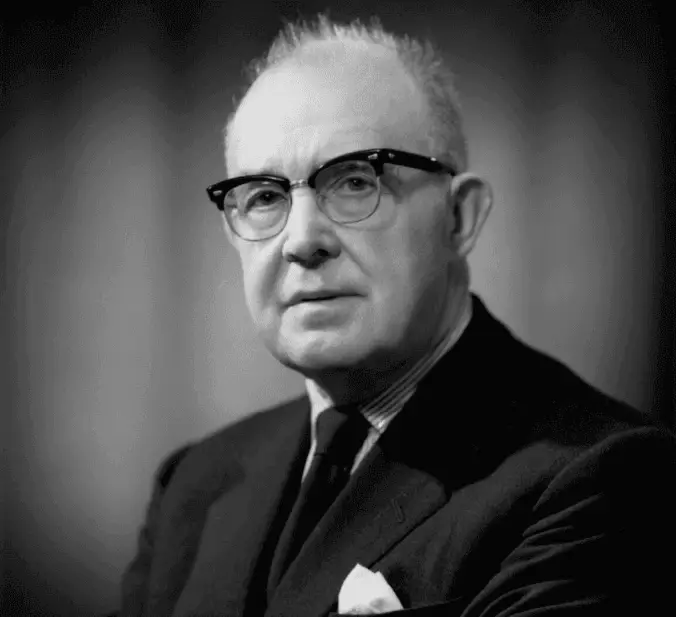

Balet’s proposal triggered a heated international controversy. British Secretary of State for the Colonies Arthur Creech Jones stated in Parliament that Argentina had no authorization to build a school in the archipelago.
The British press, notably The Times, harshly criticized the initiative, calling it a provocation. In response, Roger Balet replied that just as British schools operated freely in Argentina, it was entirely legitimate for there to be at least one Argentine school in the Malvinas.
Ultimately, however, British authorities blocked the construction, fearing that allowing it would imply tacit recognition of Argentine claims over the islands.
Historical Context of the Sovereignty Claim
The Falkland Islands (Islas Malvinas) have been under British administration since 1833, when British forces expelled the Argentine authorities and settlers established there. Since then, Argentina has claimed sovereignty over the islands, arguing that it inherited the territory from Spain upon independence and already maintained an established presence there.
For its part, the United Kingdom bases its position on nearly two centuries of continuous administration and on the principle of self-determination of the current islanders, who are of British descent and wish to remain under British sovereignty.
This tension escalated in 1982 into an armed conflict between the two countries that ended in a British victory, after which the United Kingdom reinforced its presence on the islands.
The United Nations regards the issue as an unresolved sovereignty dispute and calls for bilateral negotiations, though the United Kingdom maintains that it will not negotiate sovereignty against the wishes of the islanders, who have expressed their desire not to become part of Argentina.
15. Who José Roger Balet Was: Character, Values and Thought

Personal Organization and Social Life
José Roger Balet’s daily life reflected a deep sense of order and discipline. Just as he skilfully directed his vast commercial empire, he also structured his personal routine with precision.
An active member of the Rotary Club since 1947, he attended the weekly Wednesday luncheons without ever varying his menu, showing his characteristic consistency of habit. In addition, twice a week he hosted “the boys” (los muchachos) at his home—the close circle of friends who had stood by him since his earliest days.

Lifestyle and Health
He looked after his health carefully: he did not drink alcohol, though he served his guests a fine wine that, as he liked to say, was the same kind used by bishops. That custom dated back to his childhood in Almenar (Lleida), where as an altar boy he used to secretly sip the sacramental wine used by his uncle, Father Andrés Roger. He smoked Havana cigars sent to him from Cuba and drank only mineral water.
Hobbies and Principles
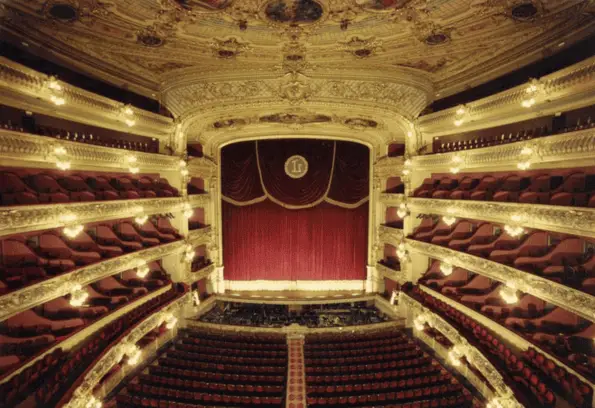
He enjoyed theater, sports and cultural gatherings such as festivals, literary circles and traditional folk clubs (peñas folklóricas). Although he enjoyed entertainment, he never gambled at casinos or racetracks; Saturday card games with friends were purely for pastime. He had a special fondness for local traditions and financially supported struggling poets so that they could publish their books.

Character and Thought
He was a keen observer with a remarkable gift for telling anecdotes with liveliness and wit. His lifelong experience dealing with people forged a firm, self-assured character. Reflective and analytical, he recorded everything he considered important in detail. His personal archive was meticulously organized, with every document related to his work filed in its corresponding folder.

Human Relations and Values
Although he lived simply, he went out of his way to understand and fulfill the wishes of those around him. He led a comfortable, dignified life in keeping with the respect he had earned through his own hard work. His warm, affable manners went hand in hand with an energetic and resolute temperament.
He possessed a sharp intuition for reading people from the very first moment. That insight enabled him to make sound decisions on major matters, leading him to say that he had never been mistaken in the big decisions of his life.

Moral Vision and Social Commitment
His worldview was deeply shaped by gratitude, hard work and social responsibility. He regarded Argentina as his own homeland on a par with his native country, feeling a moral duty to give back part of what he had received. His philosophy centered on doing good within his means, while always avoiding fostering dependency or complacency. For him, helping meant providing tools for growth, not creating weakness.
His life was a constant demonstration of self-improvement, guided by the conviction that personal merit is the true foundation of progress.

Vision of Life
He rejected material ostentation and placed no value on jewelry or precious stones. He believed in the importance of principles and service to the community. His sayings, filled with practical wisdom and gentle irony, revealed the ease of a great conversationalist free of pretension. He was never seduced by easy triumphs and lived by the belief that every human being should commit to a noble cause. He cherished freedom above all else and would never have betrayed the truth.

Politics
Although he lived through turbulent political eras, he chose to stay clear of partisan disputes, always respecting the will of the people. He believed that what mattered most was contributing to the common good, regardless of who held office, and living with integrity so as to reach the end of life with a clear conscience.
As he used to say:
“Governments pass, change and are renewed, while the Nation marches on; it is always one, and for her we must strive and work.”